
Why Municipalities Should Enforce Adjacent Property Protection on Construction Sites
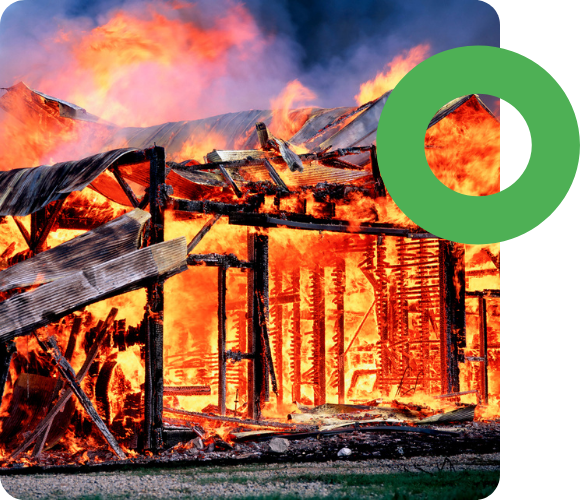
Fire risks at a construction site change every day, and in a dense urban area, that risk doesn’t stop at the property line. As buildings are framed from the ground up, renovated, or demolished, new hazards emerge, often while neighboring properties remain fully occupied. A fire on one site can quickly become a threat to the building next door.
Builders and their course-of-construction insurers need to be aware of how big the risks are to their projects if a fire happens and make sure that their due diligence is taken care of before a significant loss can get out of hand.
At the same time, regulators and municipalities already have the legislative support to push for the provision of proper safety during construction: fire code provisions that require builders and developers include sufficient protection to adjacent properties. All that is needed is the awareness to assess this risk and encourage those who build structures to demonstrate how they will protect adjacent properties before construction begins.
Construction sites are different from finished buildings. At framing stages, there are no complete or operational sprinklers in the vast majority of cases. Similarly, fire separations need to start somewhere, and don’t necessarily function properly until they’re finished. Wood, packaging, fuel, insulation, and other combustible materials may be stored around the site. At the same time, workers may be conducting hot work, using temporary wiring, heaters, and or other equipment that can start a fire. These factors all relate to the potential risks of a construction fire, however the protection measures put into place will play a key role on how severe that fire is likely to be.
An Adjacent Property Protection Plan looks at how a fire on a construction site could affect nearby buildings. It does not focus only on the project being built. It also looks at what could happen to neighbours and identifies practical steps to reduce the chance that a fire will spread or cause unacceptable damage.
As Canadian cities grow, more construction projects are taking place very close to homes, businesses, and other occupied buildings. Many projects are also larger, taller, and more complicated than they used to be. These conditions make construction fire safety a public-interest issue, not just a project-management issue.
Understanding Adjacent Property Protection Plans
An Adjacent Property Protection Plan begins by looking at the specific conditions on the site. This includes how close nearby buildings are, what materials are being used, how much combustible material is present, and whether firefighters will have enough access and water to respond quickly.
A major part of an APPP is understanding the relationship between the construction site and the properties around it. The goal is to identify where a fire could spread, how serious the exposure could be, and what practical steps can reduce the danger.
Key questions include:
- How large is the project?
- What materials are being used, and how easily could they burn?
- How much combustible material is on site?
- How close are neighbouring buildings?
- How will the risks change as construction moves through different stages?
- Is there enough water available for firefighting?
- Can fire crews reach the site quickly and safely?
- What temporary fire protection measures are already in place?
Looking at these questions helps stakeholders decide whether the site needs extra protection for nearby buildings, and whether the builder has taken the fire code requirement seriously. This review considers the size of the exposing building face, the amount of openings, the expected fire severity, and the distance to nearby buildings. The results can help identify whether extra protection is needed.
The fire code suggests a variety of ways that exposure protection might be provided, however these suggestions are incomplete and offer varying degrees of practicality to implement on an actual construction site. A key factor in developing an Adjacent Property Protection Plan is the knowledge and familiarity of the construction process, combined with the engineering analysis to assess the radiant heat flux from the building under construction. This rather unique combination of skills, combined with limited enforcement at the jurisdictional level creates conditions where fire spread risk to neighbouring sites seems to be treated as a foregone conclusion.
A Practical Step Municipalities Can Take Now
As cities grow and construction projects move closer to existing buildings, the risk to neighbouring properties becomes harder to ignore. Municipalities do not need to accept this as an unavoidable part of development. By enforcing the existing requirement for adjacent property protection, they can push projects to identify the risk, choose suitable protection measures, and keep those measures in place as the site changes.
The National Fire Code already gives regulators and municipalities a basis to act. The next step is to make builders and developers show how they are meeting Article 5.6.1.2 before construction fire risks become a neighbourhood emergency. Requiring an APPP is a practical, accountable way to increase course of construction fire safety and protect the properties next door.