
How Fire Protection and Life Safety Engineering Enabled the Distillery District Transformation
The Gooderham & Worts distillery stopped production in 1990. Thirteen years later, the same buildings reopened as a pedestrian village of restaurants, galleries, shops and theatres, and residential development followed. Very little about the structures themselves changed. Almost everything about how they are used did. That gap is where the fire protection and life safety engineering sits.
The Distillery District transformation is regularly cited as one of North America’s best examples of adaptive reuse. It is also a clean illustration of a problem that appears on nearly every heritage project: the building is not the hazard. The new occupancy is.
The site covers roughly 13 acres, about 5.3 hectares, and holds more than forty heritage buildings. James Worts bought the land in 1832 for a gristmill, and most of the buildings standing today date from the 1850s through the 1920s. The property has been protected under the Ontario Heritage Act since 1976 and designated a National Historic Site of Canada since 1988. It remains the largest and best preserved collection of Victorian industrial architecture in North America.
The construction is what a nineteenth-century industrial campus would suggest: load-bearing masonry, heavy timber, cast-iron and steel structural elements, wood-plank floors topped with concrete, and buildings physically and functionally interconnected by the process they once served. Vertical openings existed because material had to move between floors. Separations were laid out around production, not around public assembly.
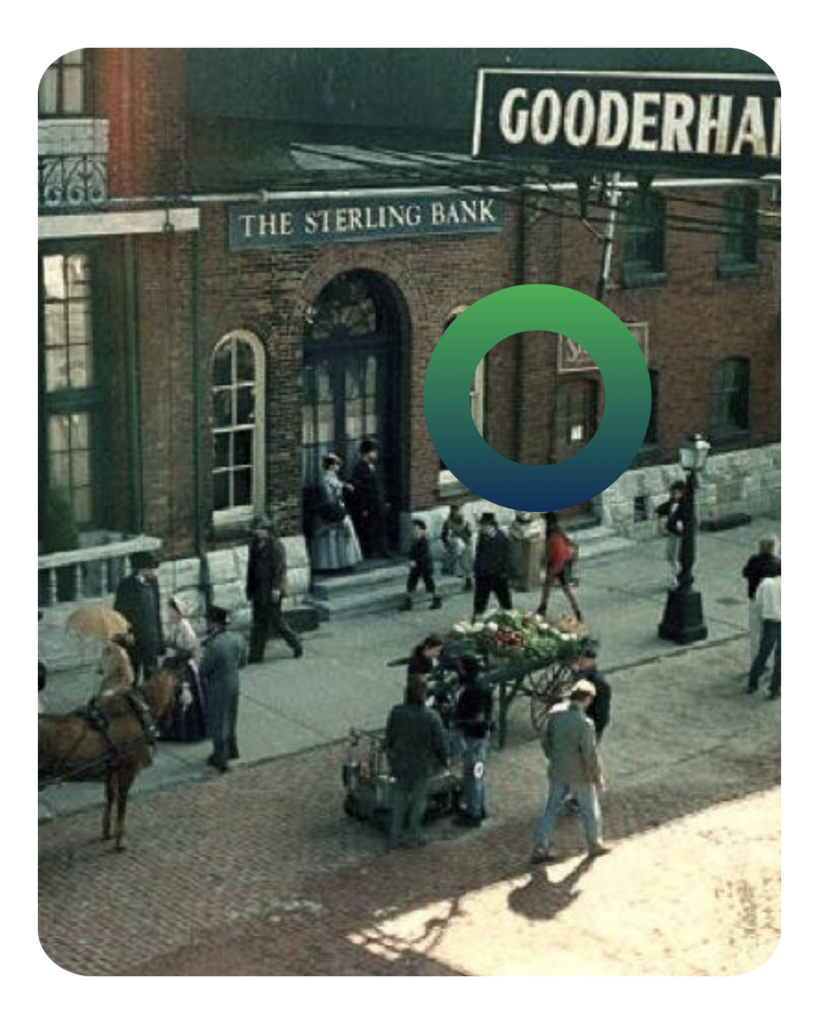
None of that was unsafe. Under an industrial occupancy the population was small, trained, familiar with the exits, and supervised by people who understood the specific hazards of distilling. The buildings did their job for well over a century, through fires, prohibition, the 1926 merger with Hiram Walker, the end of whisky production in 1957, and final closure in 1990. In the years that followed, the property served mainly as a film location, appearing in hundreds of productions. Cityscape Holdings Inc. purchased the site in 2001 and, with Dundee Realty Corporation, redeveloped it as the pedestrian district that opened to the public in 2003.
The Code Trigger is 'Change of Use', Not Age
Age alone does not oblige an existing building to be brought up to current standards. Change of use does, and this was a change of use on an unusual scale: industrial production to assembly, mercantile, business and, eventually, residential. Every parameter that governs life safety design moved at once.
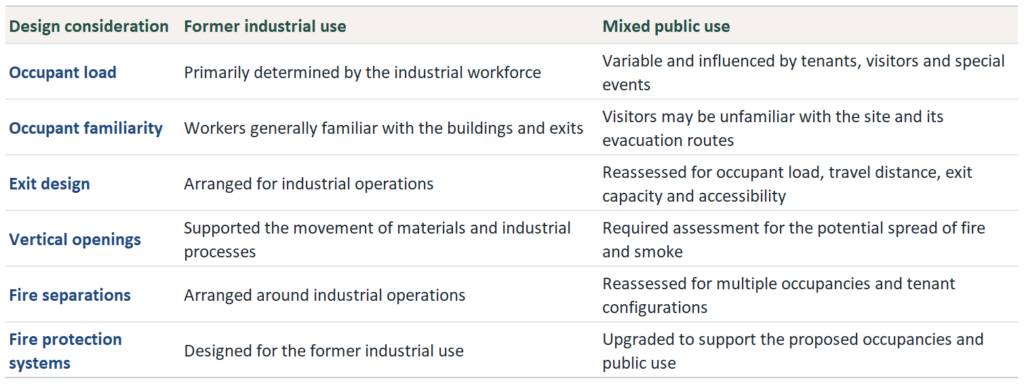
The engineering question was never whether the buildings were old. It was what level of safety a modern occupant is entitled to, and how to deliver it here.
A code deficiency in a heritage building often cannot be corrected by removing the thing that makes it heritage.
Where Prescriptive Compliance Runs Out
On a conventional project, a deficiency has a catalogue answer. Add a stair. Fur out the assembly to achieve the rating. Replace the door. On a designated heritage site, several of those answers are unavailable, because carrying them out would destroy the asset the project exists to preserve.
LRI was engaged to develop a life safety and building code strategy that worked inside the owner’s master plan rather than around it. That meant evaluating how code requirements could be applied to heritage structures, identifying where prescriptive compliance was achievable, and, where it was not, developing alternative approaches that satisfied the intent by other means. Compensating measures, enhanced detection and suppression, and operational controls take on work that the prescriptive text would otherwise assign to construction.
Sequencing matters more here than on new construction. On a new building, a late code comment costs a redesign. On a heritage building, a late code comment is paid for in original fabric.
Managing Fire Safety During Construction
The phase of this project that deserves more attention than it usually receives is construction.
Adaptive reuse work happens in buildings that are partly occupied, partly protected and partly demolished, frequently all at the same time. Conditions identified during the transition included obstructed stairways, construction materials stored in exit routes, partial sprinkler shutdowns, freezing risk to wet systems, several contractors working simultaneously, elevated occupant loads, obstructed fire routes, limited emergency response protocols, and gaps in detection and alarm coverage.
Any one of those is manageable. Together, in an unheated masonry building in a Toronto January, with a sprinkler impairment in effect and hot work in progress, they are not. A shutdown in that setting creates two exposures at once: no suppression while the system is down, and water damage on restoration if the piping has frozen.
What separates this from ordinary construction risk is the consequence. A new building lost during construction is rebuilt. A National Historic Site lost during construction is gone. Interim life safety measures, impairment procedures, hot work controls, temporary detection, maintained fire routes and clear lines of responsibility are not administrative overhead on a project of this kind. They protect everything else on the site.
Permanent Fire Protection and Life Safety Measures
The permanent fire protection and life safety framework developed for the district included:
- Sprinkler upgrades, extended coverage and system testing
- Standpipe and hose systems
- Fire detection and alarm upgrades, monitored off site
- Enhanced shaft fire ratings, additional exit stairs and upgraded stair enclosures
- Emergency lighting and emergency power provisions
- Portable fire extinguishers and emergency communication
- Dedicated fire routes and coordinated emergency response procedures
Individually, none of that is unusual. The demanding part was the installation context: routing, concealing and supporting modern systems within masonry, timber and cast-iron structures where the finished result had to remain visually intact and the equipment had to survive an unconditioned, high-traffic, event-driven environment.
The Part that Keeps Working After the Consultants Leave
Systems degrade. Organizations either maintain them or they do not.
The project incorporated a detailed Fire Safety Plan supported by a Fire Safety Committee drawing in property management, security personnel, event coordinators, maintenance staff, wardens, tenants and operational personnel. Staff training, maintenance requirements, evacuation protocols and contingency measures were built into daily operations rather than filed as a permit condition.
For a district that hosts festivals, markets and seasonal events, that structure is not a formality. The occupant load changes week to week. Temporary installations appear in fire routes if nobody is accountable for stopping them. The management structure is a life safety system in the same sense that the sprinklers are.
Lessons Learned
Heritage adaptive reuse is now routine in Ontario’s development pipeline. The transferable lessons from this project are about sequencing and governance more than about hardware.
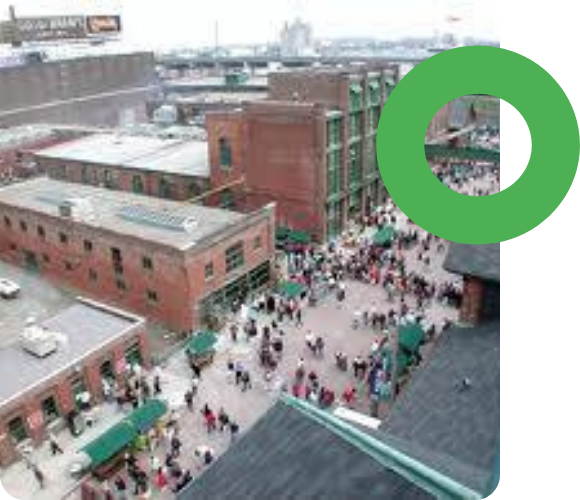
Two decades on, the district works. Visitors walk brick lanes between buildings that have not lost their industrial character, and almost none of them notice the exiting, the detection, the separations, or the plan that governs how the place empties. That is the correct outcome. Life safety engineering on a heritage site succeeds when it becomes invisible, and the buildings are still standing for the next generation to use.
FIVE STEPS FOR FUTURE HERITAGE PROJECTS
1 Assess the proposed occupancy early. The intended use determines occupant loads, exit requirements, fire separations and the required fire protection systems.
2 Include code and life safety specialists during master planning. Early decisions can reduce redesign and avoid unnecessary impacts on heritage materials.
3 Develop a construction fire safety program. Temporary impairments, hot work, changing exits and contractor activities require documented controls and assigned responsibilities.
4 Evaluate alternative solutions carefully. Where prescriptive construction would adversely affect significant heritage features, alternative approaches must address the applicable code objectives and receive the required approvals.
5 Plan for long-term operation. Fire protection systems, emergency procedures and management responsibilities must be maintained throughout the life of the development.