
Understanding the New Requirements for Dangerous Goods
Significant updates to the Ontario Fire Code dangerous goods requirements took effect on January 1, 2026, aligning the province more closely with the National Fire Code (2020). These changes are intended to enhance fire safety, improve emergency response preparedness, and ensure that building operators maintain clear and accurate dangerous goods information for first responders as part of their Fire Safety Plan.
For many owners and operators, the term “dangerous goods” often suggests specialized industrial materials, but this is a common misconception. Under the Ontario Fire Code, dangerous goods include a wide range of everyday products commonly found in commercial, residential, and mixed-use buildings. The good news is that most facilities already possess much of the documentation required to comply with the updated dangerous goods Fire Safety Plan requirements, often without the need for a complete plan overhaul.
What Counts as Dangerous Goods?
The updated Ontario Fire Code now defines dangerous goods as:
“Products, materials or substances regulated by the Transportation of Dangerous Goods Regulations (SOR/2001‑286) or classified as hazardous products under the Hazardous Products Regulations (SOR/2015‑17).”
This broad definition means the changes go far beyond laboratories or industrial facilities. Dangerous goods commonly include:
- Aerosol products
- Flammable liquids
- Industrial/compressed gases (like CO₂ cylinders used in restaurants)
- Combustible dusts
- Agricultural chemicals such as pesticides
Because many of these items are found in commercial, industrial, agricultural, and recreational settings, the updates apply to a wide range of occupancies. The requirements are greater than in previous versions of the Code.
Does This Affect You? Likely—But There’s No Need for Alarm
Whether these updates apply depends partially on quantities. A single can of deodorant or of cleaning aerosols may not trigger new requirements but larger inventories of products such as spray paint, gas cylinders, or a farm supply of pesticides may create new obligations.
This is where many operators discover a reassuring surprise: the Fire Code requires documentation, but much of it already exists. Safety Data Sheets (SDS), inventory lists, supplier specifications, and internal purchasing or storage records can often be incorporated directly into an updated Fire Safety Plan.
If you exceed the minimum quantity thresholds, the updated Code requires that these materials be clearly identified and documented so that emergency responders know exactly what they may encounter if an incident occurs.
Why These Changes Matter
The updates are fundamentally about improving safety for both occupants and first responders. When fire departments arrive at a building where dangerous goods are stored, access to accurate, clear information dramatically reduces risks. It also helps responders plan their approach, understand potential hazards, and act quickly which can result in minimizing damage and in the end, costs.
There’s also a regulatory side to consider. Failing to update a Fire Safety Plan can lead to compliance orders, fines, or penalties. If you’re unsure of the consequences or what triggers enforcement, you may want to refer to related guidance such as, Understanding Ontario’s Fire Code & FPPA: A Guide for Building Operators.
New Requirement Examples:
Compressed Gas
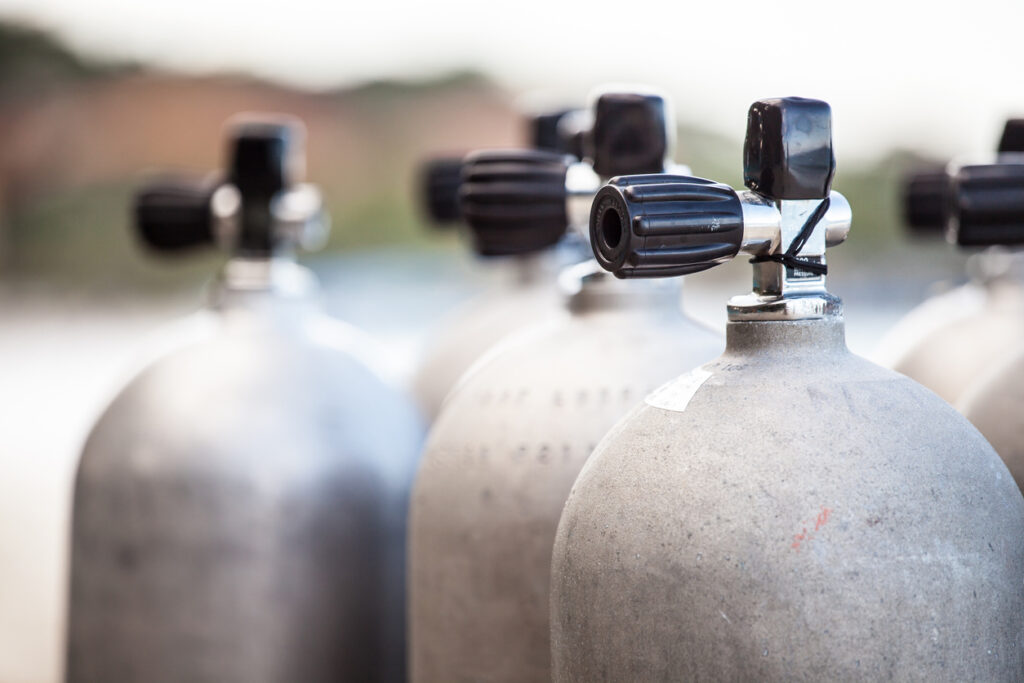
Many buildings contain compressed air or gas systems, such as industrial air receivers, medical air, fire protection systems, or CO₂ tanks for restaurant beverage carbonation, that present life‑safety considerations. Under the new requirements, Fire Safety Plans must identify the type, location, and quantity of these tanks. Where systems were already installed in accordance with existing guidelines, no physical changes are typically required; only their locations and quantities need to be documented in the Fire Safety Plan.
Aerosol Products

Aerosol products are widely used, and found in most building types, including offices, residential towers, retail spaces, maintenance facilities, and high‑rise buildings, commonly for cleaning products, lubricants, paints, and other maintenance materials. While these items were previously required to be stored in approved flammable or combustible storage cabinets, the new requirements now require their presence to be documented in the Fire Safety Plan. The plan must note how aerosols are stored and the approximate quantities, without needing to identify specific product types or brands.
These examples illustrate how the updates blend both structural measures and documentation expectations, depending on hazard and volume.
Staying Compliant Without Starting from Scratch
A practical first step is simply reviewing what dangerous goods you store, in what quantities, and what documentation you already have. Often, compliance is a matter of organizing existing information and adding it to your Fire Safety Plan in the format the updated Code requires, no major overhaul needed.
If updating the plan feels cumbersome or unclear, many operators choose to bring in support to ensure requirements are met and inspection‑ready. LRI Engineering has extensive experience developing Fire Safety Plans for complex and high‑risk buildings, and can help you quickly identify what applies, streamline your documentation, and produce a fully compliant plan without added burden on your team.